Explorations
The geometry of numbers.
Three working instruments — drag, sweep, and run them. Elliptic-curve group law, the prime-counting theorem, and the search for Fermat near-misses, rendered live in the browser.
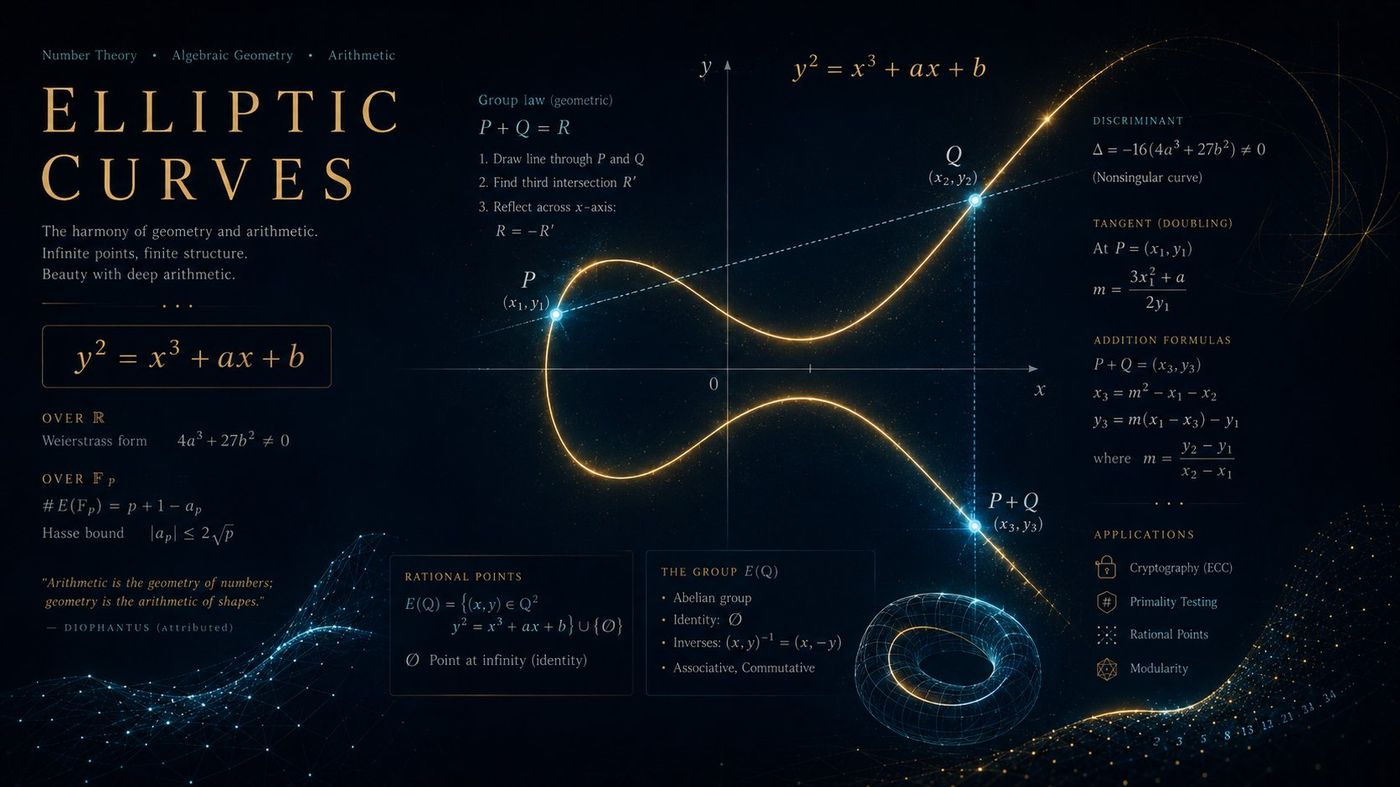
Elliptic Curves
On a curve y² = x³ + ax + b, three points on any straight line sum to zero. That single rule turns a curve into a group — the engine beneath elliptic-curve cryptography.
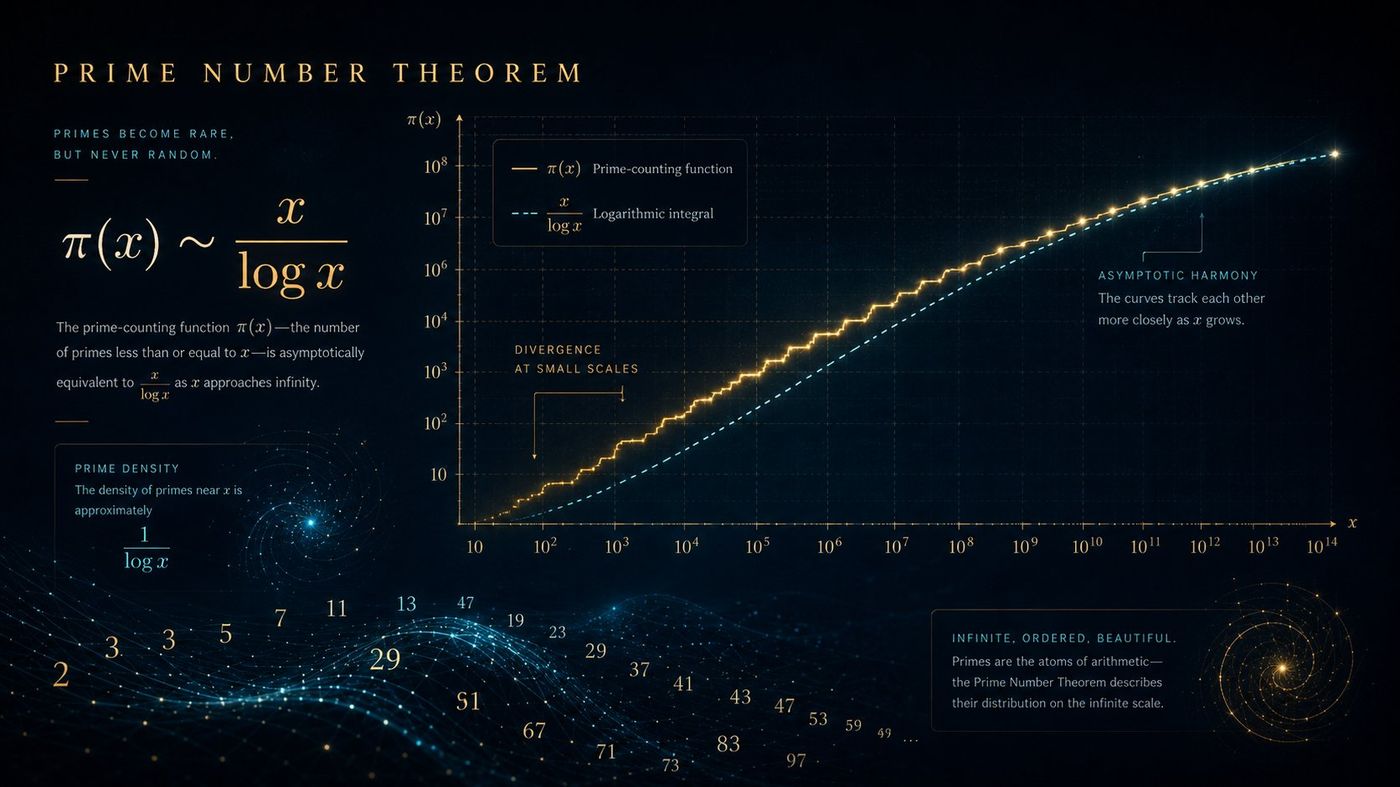
The Prime Number Theorem
Primes thin out, but not at random: the count below x tracks x / ln x ever more closely. Run the 2,200-year-old sieve and watch the ratio π(x)·ln x / x bend toward 1.
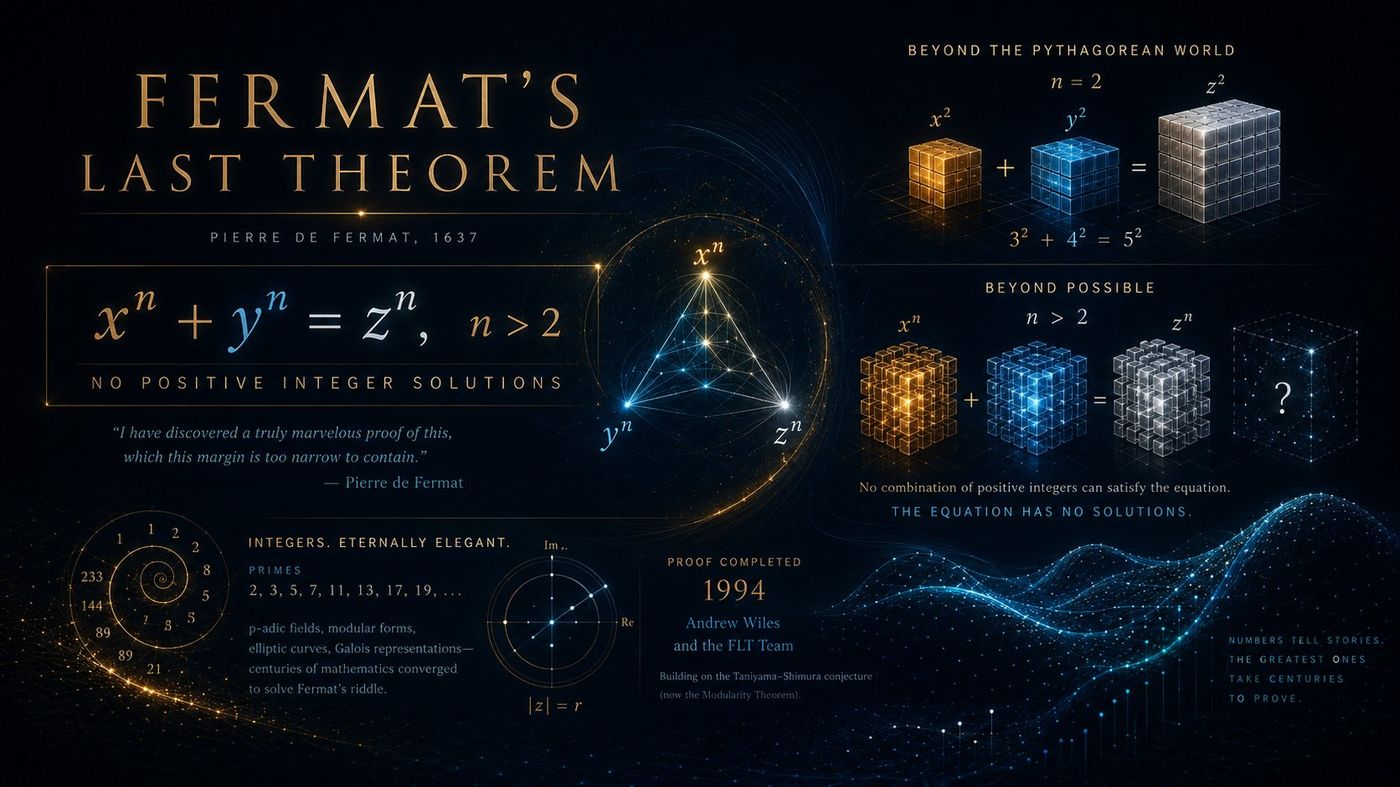
Fermat’s Last Theorem
For n > 2, the equation xⁿ + yⁿ = zⁿ has no solution in positive integers. Search every pair below the bound — the sum always lands between two perfect powers, never on one.
Engage
Curious about the method?
If one of these instruments maps to a problem you are working on, describe it below. The same machinery powers the applied work — compression, detection, and encryption.